Author: Marita

  • Sunday Reflections: Trust & Gratitude

    Sunday Reflections: Trust & Gratitude

    Yesterday, in our Sunday morning liturgy, we got to sink into a sermon about stewardship as a spiritual practice. We took a look at Luke 16:1–13, and Reverend Pat delivered a thoughtful message inviting us to see stewardship in a new light. She shared how, in our Episcopal and Anglican tradition, the spiritual practice of stewardship is rooted in the belief that all we have and all we are comes from God, including our very lives.

    Reverend Pat put it this way: “I want to make the case that following the spiritual practice of stewardship in little things can add up to so much more than just giving money or time or talent.” She reminded us that true stewardship isn’t just about one aspect of our lives—it’s about recognizing that everything we are and everything we have is part of what we’re called to steward.

    And as we explored that gospel passage, Jesus’s words stood out: “Whoever is faithful in a very little is faithful also in much.” It was a reminder that the small daily acts of trust we practice shape us for the bigger steps of faith down the line.

    Reflections on Stewardship

    During her sermon, Reverend Pat nudged us to think beyond the usual “just give money” mindset. She invited us to see stewardship as a way of living faithfully in a world that often sells us the idea that we never have enough.

    For me, that often means resisting the idea that some new gadget or piece of furniture will magically make life perfect. Honestly, online shopping makes it so easy to just grab things without thinking, so I have to be mindful about what I’m buying and why. It’s okay if I don’t have everything I want in this world; the heart of it is remembering that even if I don’t have all the things I want, God will always provide what I need.

    Tithing as Trust

    That understanding really shapes how Nathan and I approach tithing. As Reverend Pat shared, tithing isn’t about giving from abundance—it’s about practicing trust. That really hit home for me, because in my own journey I’ve wrestled with the idea of tithing feeling like a status symbol in past communities. But for us, it was about making a regular act of trust part of our spiritual practice of stewardship.

    We decided to start small, not feeling like we had to hit a certain percentage immediately. We just committed to a simple monthly amount and set it up as an automatic withdrawal. Doing that really took the pressure off and made sure we were consistent. And just like Reverend Pat noticed unexpected blessings when she started tithing, we’ve also found that some surprising little cash inflows showed up when we didn’t expect them. It was a gentle reminder that it’s okay to start small, and that faithfulness grows from those little steps.

    Transformation Through Faithfulness

    Reverend Pat spoke about how her own practice of tithing gradually transformed her life. Starting small led to surprising changes: debts eased, opportunities opened, and most of all, her posture shifted from fear to trust, and from trust to gratitude. What began as a reluctant step of obedience became a way of life rooted in confidence that God would provide.

    That part resonated with me deeply. I think back to when Nathan and I took the leap to move to North Carolina. At the time, it felt like a risk — uncertain jobs, new surroundings, health questions still hanging over me. But over the years, that step has incrementally turned into an unexpected blessing. Looking back, I can see how that small act of trust has unfolded into a beautiful life — a transformation I could never have scripted for myself.

    Faith doesn’t usually unfold all at once. It grows through the steady practice of offering what we have, and trusting that God meets us in the gaps.

    Conclusion: Trust & Gratitude

    Reverend Pat closed with an invitation that was both simple and stretching: stewardship isn’t only about money. It’s about offering our whole selves — our time, our talents, our energy, and our love. The size of the act isn’t what matters; it’s the faithfulness behind it. Even the smallest gesture of trust can open us to God’s larger work.

    She landed on the idea that stewardship, at its heart, rests on two commandments: trust and gratitude. That struck something in me. Those words aren’t lofty theology; they’re daily practices. They remind me that faith is built in the small steps — the ways I choose to trust when I don’t have all the answers, and the ways I choose gratitude even when things aren’t perfect.

    For me, these have become my own commandments too. Practicing faith in small things strengthens me for the larger leaps. And carrying trust and gratitude forward feels like the clearest way to walk in faith this week.

    Prayer for Stewardship

    Gracious Lord, teach me to trust you in the small things, that I may grow in faith for the larger callings before me. Fill my heart with gratitude, that in all I have and all I am, I may offer myself to your service. Through Jesus Christ my Lord. Amen.

  • He Was a Really, Really Good Dad

    My dad died early in the morning on Wednesday July 16.

    Even as I write that, it still doesn’t feel entirely real. I’ve cried — there have definitely been tears — but beneath the sorrow, there’s a surprising and steady peace. His suffering is over now. He is free, held in the presence of God the Father. And because of our shared faith, I believe with every fiber of my being that he’s in heaven… and that one day, I’ll see him again.

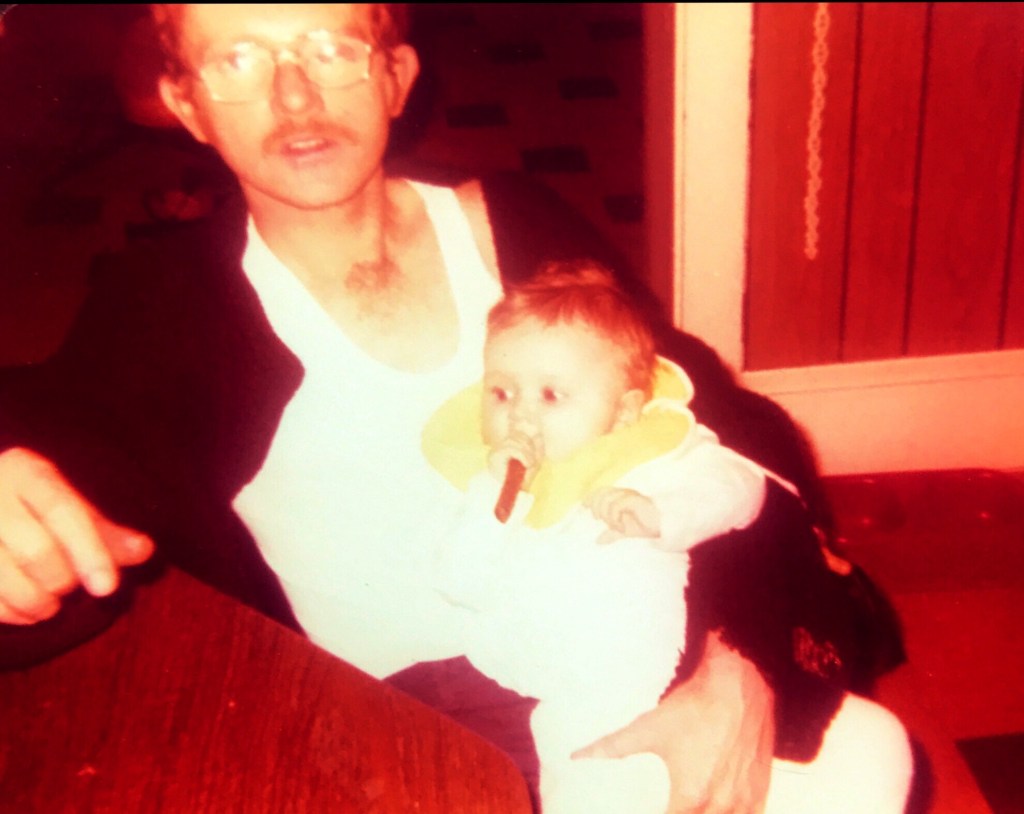
    Me and my Dad

    Shortly after I got the call — it was twenty after one in the morning — I came out to the kitchen, to the little workstation where I so often sit and write. The world was still and quiet. I lit a candle. I lit some incense. And I opened the Book of Common Prayer to the section titled Ministration at the Time of Death. Then in the stillness of the night — just me, God, and the memory of my dad — I went through the entire liturgy, piece by piece. I let the tears fall as they wanted to fall, praying for his soul, for his journey home, for his union with our Father in heaven.

    When the prayers were done, I stayed there in the silence, holding space for my grief.

    Later that day, I attended a healing Eucharist service at our church. I spent time meditating on my father’s life and how much he meant to me. I received a blessing and anointing, and I prayed that the Lord would ease my grief and comfort me in the knowledge that my father is at peace and in glory. After the service, I sat quietly and prayed a rosary for him.

    Before I left church, I was blessed with the unexpected grace of time with our reverend. During that time, I was able to tell her about my dad. I shared stories, feelings, the heartbreak and the hope. She offered compassion and peace, and I left feeling a sense of fullness from my faith community.

    Then, not even 24 hours after he passed, I found myself in attendance at a performance of Les Misérables. It was magical — the way the Lord used that performance to speak to me, to speak straight to my heart. It brought to mind so many things about my dad: his sacrifices, his upright character, his flaws, and his unwavering dedication.

    He wasn’t perfect, but he was good. He loved me unconditionally. He was the first — and one of only two men — who ever did.

    And at the end of the show, when the hero passes peacefully and is greeted by angels, I wept again — picturing my father being carried home in just that way. Welcomed. Rested. Free.

    In those first 24 hours, I was given space to grieve, to remember, to pray, and to say goodbye.

    And I am so grateful.

    Since then, my mind has been filled with memories — the big, life-shaping ones, and the small, tender ones. One of the stories I always tell is from when I was a little girl. He’d pick me up from dance class and take me to the toy store, and then to McDonald’s. One time, I fell in love with this big Raggedy Ann doll. It was more than he usually spent, and he said, “If you get the doll, we can’t do McDonald’s.” I said I wanted the doll — and he bought it for me. And then… we went to McDonald’s anyway.

    That was just who he was. I still have that doll.

    Helping build the workshop.

    There were so many moments like that, even later in life. He once took me to a Star Trek convention when I was in high school. He didn’t know anything about Star Trek, but he came along just to be with me. We even had lunch at the fancy restaurant in the convention center — just the two of us. Mom joked that she was jealous when we got home because he never took her there!

    And I’ll never forget the years we went to that Christian music festival together. It started because I didn’t have anyone to go with one year, and when Dad found out I was planning to go alone, he said, “Nope. I’m coming with you.” And he did — not just that year, but for four years after. Some of my favorite memories are from those trips: camping, concerts, long drives, and quiet moments together.

    Through it all, I never missed a chance to tell him I loved him. I said it in person, in cards, in hugs and words and every possible way I knew how. I told him he was the best dad in the world. And I know — with complete certainty — that he knew how deeply I loved and cherished him.

    That’s part of why I can feel peace now. Yes, there is grief. But there is peace, too.

    He was a good dad.

    A really, really good dad.

    And I was so lucky to be his daughter.

    “Well done, good and faithful servant… enter into the joy of your Lord.” — Matthew 25:23

  • Spiritual Reflections on the Gospel of Mark: Touching the Untouchable

    Spiritual Reflections on the Gospel of Mark: Touching the Untouchable

    This morning’s lectionary reading came from the Gospel of Mark, focusing on the moment when Jesus heals a man with leprosy (Mark 1:40–45). It’s a story I’ve heard many times, but today it struck me differently.

    “A leper came to Him begging Him, and kneeling said to Him, ‘If you choose, you can make me clean.’ Moved with pity, Jesus stretched out His hand and touched him, and said to him, ‘I do choose. Be made clean!’” (Mark 1:40–41, NRSV)

    What really stayed with me was the simple, stunning fact that even though Jesus would show again and again that He can heal with just a word—from a distance, as with the centurion’s servant (Matthew 8:5–13) or when He raised Lazarus (John 11:1–44)—He chose, in this moment, to reach out and physically touch the leper.

    In Jesus’ time, lepers were not just physically ill; they were social and religious outcasts. According to the Law of Moses (Leviticus 13:45–46; Numbers 5:2–3), they were required to live outside the community and announce their presence by crying out “Unclean! Unclean!” so others could keep their distance. They carried the weight of being seen as spiritually unclean, untouchable, unredeemable. The idea that anyone would move closer to a leper—let alone touch them—was unthinkable.

    But Jesus did exactly that. He closed the distance everyone else kept. He crossed the barrier that fear and ritual purity laws had built. His healing was more than a physical cure—it was an act of restoration and redemption. It was as if, in that touch, Jesus was declaring: No one is too far gone, too unclean, too unworthy to be reached, healed, and loved.

    While I reflected on this, another story from the Gospels came to mind—the woman who suffered from constant bleeding (Mark 5:25–34). She, too, was untouchable in the eyes of her community. Imagine her daily shame, the discomfort, the isolation—she was likely used to people recoiling from her presence. And yet, she believed that if she could just reach out and touch the hem of Jesus’ robe, it would be enough.

    What moves me is that her faith was hidden—quiet but desperate. She didn’t ask Jesus directly; she didn’t want to be seen. She simply reached out, hoping for healing. And Jesus, feeling that act of faith, stopped everything. He saw her. He called her “daughter.” He named her faith and made her whole again.

    Both of these stories remind me of that image so many of us hold dear: a human hand reaching up for the hand of God. In these moments, Jesus not only allowed the “untouchable” to reach for Him—He reached back, closing the gap that the world had forced open.

    There is such a powerful lesson here for me today. No one is beyond compassion or hope. No one is unworthy of being restored. We are not defined by what society labels as unclean or unworthy. Christ shattered those barriers, then and now. He made clear that every person is redeemable, saveable, healable—and loved.

    It’s easy to think of ourselves—or others—as too far gone, too broken, or too lost. But the Gospel of Mark reminds us that our faith, even a hidden touch on the hem of His robe, is enough. And when we reach out, we find that Jesus is already reaching back.

  • Grace and Self-Control: A Reflection on Titus 2:11–12

    Grace and Self-Control: A Reflection on Titus 2:11–12

    Lately, I’ve felt deeply grateful for re-establishing a steady morning routine of prayer and quiet study. It’s so easy to drift when life feels noisy, but carving out that space each day — even just a little while — is a way of planting seeds for my spiritual life to grow.

    One small but meaningful change I’ve added is taking time to journal after my morning prayers. Sometimes I let a good insight slip away in the busyness of the day, but writing down what stands out helps me carry it forward.

    A big source of support for me has been my Hour by Hour prayer book. I’ve found it to be a practical, comforting companion alongside my Book of Common Prayer. It’s like having a well-laid path through the Daily Office — the readings and prayers are ready for me, and yet they always feel fresh.

    This week, my heart settled on Titus 2:11–12:

    “For the grace of God has appeared, bringing salvation to all, training us to renounce impiety and worldly passions, and in the present age to live lives that are self-controlled, upright, and godly.”

    What struck me most was the reminder that God’s grace doesn’t just save — it trains. Grace has appeared in Jesus and continues to live in us through the Holy Spirit. It teaches us to turn away from things that keep us disconnected from God: irreverence, the temptations of a world that pulls our hearts in so many directions.

    I spent time looking up “impiety” — the idea of lacking reverence — and it gave me a fresh perspective. Grace helps me see where I’ve grown careless with my respect for God, or when I let other things matter more than they should. And “worldly passions” — those fleeting temptations, whether it’s materialism, anger, or unhealthy desires — can so easily overshadow what truly matters.

    What brings me hope is that grace doesn’t just point out the problem; it trains me to live differently. Self-control, uprightness, and godliness don’t come naturally to any of us — they’re cultivated. I love the image of being “upright” like a strong pillar, steady enough to help bear the weight of others’ burdens too.

    And all of this, Paul reminds us, is for “the present age.” God’s grace is timeless. No matter the world’s chaos, this promise remains: we are invited to live as people through whom Christ shines.

    This week, I’m committing to memorize Titus 2:11–12. I want it tucked into my heart, ready when I need to remember what this training looks like in real life. And each morning, I’ll sit down after my prayers to jot down whatever new seeds God plants in me.

    Maybe you’ll join me — a small habit, but one that could make all the difference.

    Grace has appeared. Let’s let it train us to live well, together.


    The featured image was thoughtfully created with the help of AI image generation tools to capture the mood of peaceful reflection.

  • A Change of Plans, A Gift of Rest

    A Change of Plans, A Gift of Rest

    Sometimes, in the depths of difficulty, the Lord surprises us with His greatest mercies.

    This year was supposed to look different. We had planned to be elsewhere, in a familiar place, with a familiar rhythm. But life threw us a curveball, and suddenly we found ourselves searching for something new—something that would still allow us to rest, reconnect, and breathe deeply.

    I wasn’t sure we’d find anything that would suit us, especially with two dogs in tow. But then, almost unexpectedly, I came across a small family-run campground just three hours from home—Broad River Campground—and saw they had pet-friendly cabins available. It felt like a quiet nudge, a little open door we hadn’t seen before.

    We said yes, packed up, and drove out.

    And the moment we arrived, we knew.

    This is our place.

    There was an immediate exhale from somewhere deep inside. The kind of soul-sigh that comes not from weariness, but from finding what you didn’t know you were looking for. The cabin was warm and welcoming, thoughtfully furnished with everything we needed—but more than that, it had peace. The campground itself was smaller than the one we were used to, but it was full of character, clearly tended with love and care. The staff were kind and attentive, and everything felt… grounded.

    We quickly fell into a gentle rhythm—morning walks with the dogs, coffee outside, reading on the porch, little trips into town. The days weren’t packed with plans, but with moments. And those moments were full.

    We needed rest. And there, we found it.

    We needed grace. And there, it met us.

    So often, we resist change. We grieve what didn’t go according to plan. But this time reminded me: sometimes the most unexpected turns lead us exactly where we need to be.

    God’s mercy is not always loud. Sometimes it’s quiet. Sometimes it looks like a little cabin by the river, a few faithful dogs, and the chance to just be.

    Post-Vacation Reflection:

    Now that we’re back home, surrounded by the familiar comforts of daily life, I find myself unpacking more than just our suitcases. I’m unpacking the memories of our time at Broad River Campground—reflecting on the unexpected peace we found there and the gentle reminder that sometimes the best moments come when you step off the beaten path.

    The simple routines we established—those peaceful walks, porch conversations, and moments of stillness—left a lasting imprint. Being back, I realize just how much we needed that kind of rest.

    And now, I carry it with me.

    The peace. The rhythm. The quiet grace of it all.

  • We Cannot Save Ourselves: On the Shore with Jesus

    We Cannot Save Ourselves: On the Shore with Jesus

    Third Sunday of Easter – John 21:1–19

    Opening Reflection

    There’s a moment in this Sunday’s Gospel that stopped me in my tracks. It wasn’t the miraculous catch of fish, though that’s wondrous. It wasn’t even the tenderness of Jesus inviting His tired friends to breakfast. It was that quiet, deliberate exchange with Peter—the threefold question: “Do you love me?”

    I never made the connection before. Three questions. Three denials. Not a coincidence. Not punishment. But something deeper. A kind of holy mirroring. A gentle but unwavering look into the truth. And it undid me.

    Reflection on Peter’s Denial and Jesus’ Invitation

    Peter couldn’t undo what he’d done. He couldn’t rewind the rooster’s crow or unsay the words that fell from his lips in fear and self-preservation. And yet, Jesus didn’t demand an apology. He didn’t lecture Peter or test him. He simply invited him to love again.

    That’s the part that humbles me. We can’t rescue ourselves from our own weakness. We can’t save ourselves from shame or regret. But Jesus doesn’t ask us to. He meets us where we are—on the shore, in our hunger, in our emptiness—and prepares a meal. He says, “Come and eat.” And after we are fed, after we are known, then He gives us something to do—not to earn His love, but because of it.

    “Feed my sheep.” Not prove yourself. Not make it up to me. Just love Me. And let that love guide you.

    The Movement of Grace

    We don’t know the exact number of days between the night Peter denied Jesus and the morning he found himself sitting by another fire with Him. But we do know this: the denial happened on Maundy Thursday, the night Jesus was arrested (John 18:15–18, 25–27). And this quiet morning by the sea, where Jesus cooks breakfast and asks Peter, “Do you love me?”—it likely came at least ten days or more later.

    That means Peter carried the weight of those three denials for days. Through the darkness of Good Friday. Through the stillness of Holy Saturday. Through the astonishment of Easter Sunday and beyond.

    He had time to relive it. To rehash every word. To ask himself what he could have said instead. To sit in the ache of what couldn’t be undone.

    And honestly, who among us hasn’t done the same? We all know what it’s like to replay our failures. To long for a different ending to a hard conversation. To wonder if we’ve disqualified ourselves from love, from purpose, from being welcomed back.

    And that’s what makes this moment by the fire so powerful. Peter denied Jesus beside a charcoal fire. Now Jesus meets him by another fire—offering food, warmth, and restoration. There’s no grand speech. No shaming. Just three quiet invitations to love again. And then a calling: feed my sheep.

    This is the heart of the Gospel: the movement from helplessness to belovedness, and from belovedness to faithful response.

    It’s not about earning forgiveness or fixing the past. It’s about being known, being loved, and being sent—just as we are.

    Encouragement for the Reader

    If you’re feeling the weight of all you haven’t done, or all you cannot fix—this Gospel is for you. It doesn’t promise that we’ll be made perfect, but it does promise that we are still wanted. That Jesus shows up, calls us by name, and invites us to live in love. We don’t need to save ourselves. That work has already been done.

    And from that place of being loved, we’re called to go out—not to prove we’re worthy, but to love others as we have been loved.

    Closing Prayer

    O God, whose blessed Son made himself known to his disciples in the breaking of bread: Open the eyes of our faith, that we may behold him in all his redeeming work; who lives and reigns with you, in the unity of the Holy Spirit, one God, now and for ever. Amen.

    (Collect for the Third Sunday of Easter, BCP p. 224)
  • Porch Days with Daisy

    Porch Days with Daisy

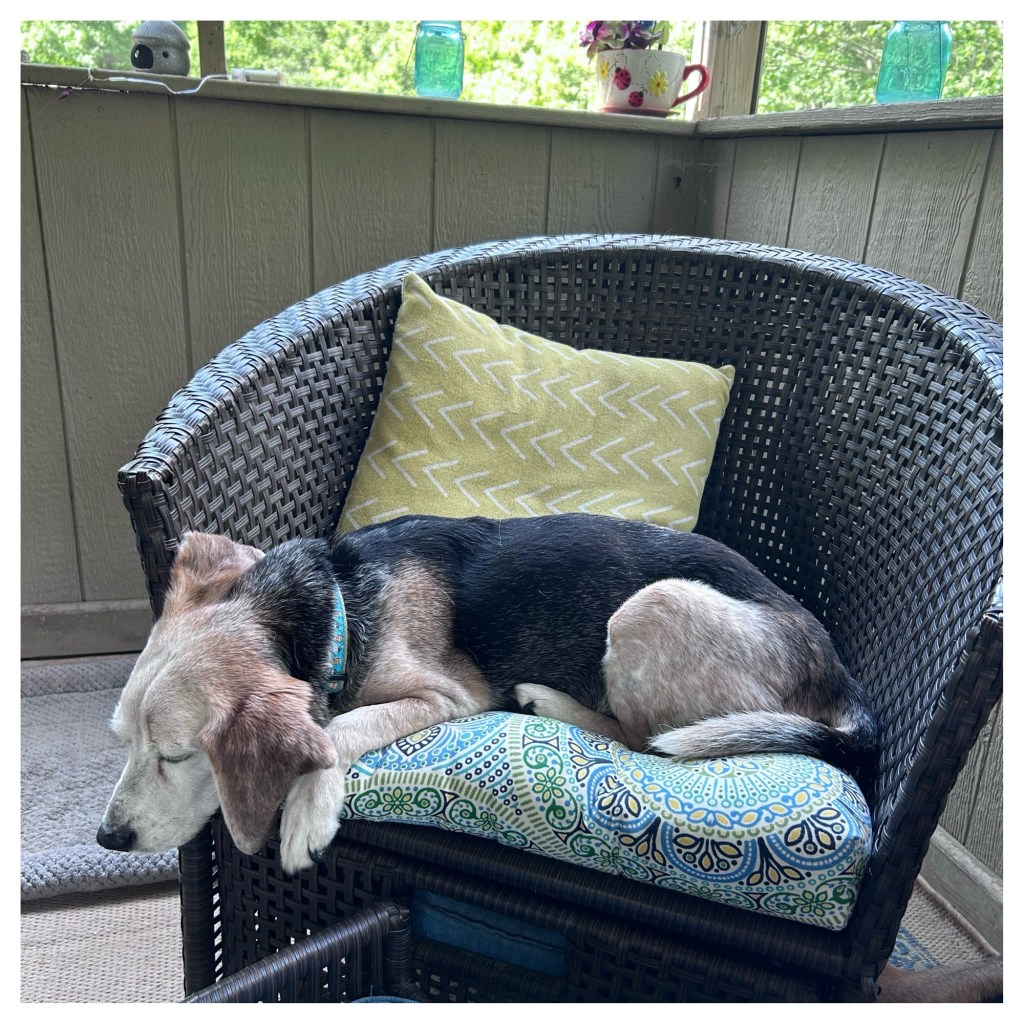
    Today I watched Daisy, my sweet old girl, curled up in her favorite chair on the porch—content, peaceful, and safe. The sunlight streamed through the trees, and she let it warm her face as she drifted in and out of sleep ☀️💤. Her eyesight is fading, and she gets a little confused sometimes, but there’s still so much life in her. So much heart.

    This chair has become her throne—a soft cushion, a sunny corner, and the hum of the outside world she’s always loved. It’s where she can just be. No pressure, no pain, no expectations. Just peace 🌿🪑.

    We don’t know how much time we have left with her. She’s walked so many miles beside us—through good days, hard seasons, quiet nights. She’s always been there. And now we get to be here for her. Holding space. Letting her rest.

    These moments… they feel like small miracles. And I don’t want to forget them. So here it is—a memory of a gentle day, a soft breeze, and a beagle who still loves to nap in the sun.

    Love you forever, Daisy girl.

  • Rooted in the Journey: A Lenten Reflection

    Rooted in the Journey: A Lenten Reflection

    Lent has always been a season of preparation—a time of reflection, repentance, and renewal. But this year, I find myself drawn to the idea of being rooted in faith, much like a tree that deepens its roots rather than resisting the winds of change.

    Recent months have brought turmoil and upheaval, moments that have shaken me. But in the midst of it all, I have found that prayer—especially through the Anglican rosary and the Book of Common Prayer—helps me find my roots again.

    Finding Stability in Prayer

    There is something about the rhythm of prayer, the way it creates a familiar space of connection with God, that grounds me. These prayers give me a steady foundation from which I can explore other avenues of prayer and deeper spiritual reflection.

    Lent is not just about giving something up—it is about making space. Space for stillness, renewal, and for God to speak into the places where I most need His presence.

    Slowing Down and Deepening My Roots

    This year, I am embracing Lent as a season to intentionally slow down and deepen my faith. Rather than focusing on doing more, I want to allow this time to shape me—to let my faith settle deeper into the core of who I am.

    One of the ways I’m looking forward to doing this is through the Lenten book study at my church. We will be delving into the book: Seek and You Will Find by Rhonda Mawhood Lee. There is something profoundly meaningful about journeying through Lent with others, reflecting together, and allowing scripture and discussion to enrich my understanding. Just as prayer roots me in God’s presence, this shared journey roots me in the gift of community.

    An Invitation to Be Present

    As we step into Lent, my hope is to remain open—to be present to the ways God is moving, to rest in the rhythms of prayer, and to trust that even in the quiet, unseen moments, my roots are growing deeper.

    How are you approaching Lent this year? Are there practices that help you feel grounded in your faith? Let’s journey together.


    Image Credit: The featured image was created using Al tools to bring the image of Lent to life.

  • Max’s Vet Journey: A Beagle Mama’s Experience with Cellulitis and Healing

    Max’s Vet Journey: A Beagle Mama’s Experience with Cellulitis and Healing

    Being a beagle mama means riding the waves of both joy and unexpected challenges. A little over a week ago, I noticed a hot spot on Max’s leg and started treating it at home. Everything seemed manageable until, out of nowhere, his leg swelled up. It was alarming, and I didn’t waste time getting him to the vet.

    That first visit revealed Max likely has a cellulitis infection. Since then, we’ve been on a bit of a vet journey—three visits and two dressing changes later, and we’re heading back for his fourth visit on Monday. Max has been such a trooper through it all, keeping his sweet spirit even when the bandages come off and the wound care begins.

    One of the silver linings of these vet days is our little tradition—a stop at McDonald’s for a well-deserved treat. Usually, it’s french fries, but since one of our appointments was bright and early, Max and Daisy got hash browns instead. I love being able to give them something simple to brighten what could otherwise be a tough day.

    As much as I wish Max’s healing journey was already over, I’m grateful for how resilient he’s been and the small joys that have come along the way. Sometimes, being a beagle mama means facing the unexpected, but the love and loyalty of my hound dogs make every step worth it.

    I’ll post an update after Monday’s visit. Hopefully, we’ll be even closer to getting Max back to full health!

    Do you have any vet day traditions or special ways to comfort your pets during healing? I’d love to hear about them in the comments!

  • Finding Gratitude in Resilience: A Reflection on Standing Strong Like a Tree

    Finding Gratitude in Resilience: A Reflection on Standing Strong Like a Tree

    Lately, I’ve been struggling to feel gratitude. Chronic pain, emotional challenges, and the heaviness of life have made it hard to see the good. But today, as I took a moment to reflect, I realized something extraordinary: despite it all, I’m still here.

    This realization sparked a deep sense of gratitude—not for the absence of hardship, but for my resilience in facing it. I’m still standing, still showing up for life, even when it feels impossibly hard. That is something worth honoring.

    When I think of “still standing,” I imagine a tree—rooted, strong, and grounded. Trees withstand storms, droughts, and the changing seasons. They endure, not just to survive, but to thrive in their purpose. A tree offers a home for birds, bears fruit to nourish others, provides shade for rest, and stretches its branches outward in service to the world.

    I want to be like that tree. Through my faith and my connection to my community, I hope to grow into a life that offers support, comfort, and nourishment to others. When this season of hardship passes, I want to bear fruit that blesses others, whether through love, kindness, or simply being a safe place for someone in need.

    Today, I’m grateful for my resilience—for being able to withstand life’s storms and still be rooted in hope. Through God’s grace, I believe I am being nurtured for a greater purpose, one that reaches beyond myself to serve others.

    If you’ve been struggling to feel gratitude, I encourage you to reflect on your own resilience. Think of the storms you’ve weathered and the strength you’ve shown. You might be surprised by the quiet gratitude and hope that blossoms when you do.


    Image Credit: The featured image was created using Al tools to bring the tree metaphor to life.